
Your Ultimate 5-Day Kyushu Rail Adventure: Everything You Need to Know
Kyushu is one of Japan's best-kept secrets. While most visitors rush between Tokyo, Kyoto, and Osaka on the well-trodden Golden Route, this southern island quietly offers everything that makes Japan extraordinary — ancient temples, otherworldly volcanic landscapes, world-class hot springs, poignant history, and food that rivals anywhere in the country.
JR REGIONAL PASSKYUSHUHOT SPRINGS
Josh K
3/16/20268 min read
The good news? Getting around is easy and affordable with the JR All Kyushu Pass. This regional rail pass unlocks unlimited travel on JR Kyushu trains — including the Shinkansen bullet train and several scenic limited express services — for a set number of days. For a 5-day trip, it is almost certainly going to save you a significant amount of money compared to buying individual tickets. Buy the JR All Kyushu Pass here.
This guide walks you through a carefully planned 5-day itinerary starting and ending in Fukuoka, taking you through the best Kyushu has to offer: the misty onsen town of Yufuin, the volcanic hot springs of Beppu, the historically layered city of Nagasaki, the samurai castle town of Kumamoto, and the dramatic volcanic coastline of Kagoshima.
Have more time? Kyushu pairs beautifully with a wider Japan trip. Check out our 14-day JR Pass itinerary from Tokyo to Kyushu for a route that combines the Golden Route highlights with this full Kyushu circuit.
About the JR All Kyushu Pass
Before you start planning, it is worth understanding exactly what the pass covers. The JR All Kyushu Pass gives you unlimited rides on all JR Kyushu trains across the entire island, including:
The Kyushu Shinkansen (bullet train) between Fukuoka, Kumamoto, and Kagoshima
Limited express trains like the Sonic, Kamome, and the spectacular Yufu no Mori
Local and rapid JR trains throughout the network
Note: Seat reservations are required on the Shinkansen and most limited express trains. With the All Kyushu Pass, reservations are free and unlimited when booked at a JR Kyushu ticket office (Midori No Madoguchi) or vending machine after you arrive. Online pre-booking before your trip may be available depending on where you purchase the pass, but typically carries a small fee.
Not sure which pass is right for your trip? Our complete guide to JR Regional Passes breaks down every option and helps you choose the best value pass for your itinerary.
The 5-day pass is the ideal match for this itinerary. Activate it on Day 2 (after spending your first day exploring Fukuoka), and it covers you through the final Shinkansen journey home.
Day 1: Fukuoka — Ease Into Kyushu Life
Do not activate your JR Pass today. Save it for when the big train journeys begin tomorrow. Instead, use Day 1 to shake off any jet lag, explore Fukuoka at a relaxed pace, and eat as much ramen as humanly possible.
Fukuoka is the island's largest and most dynamic city. It sits at the northern tip of Kyushu and serves as the gateway for most travellers arriving by air or from Osaka via Shinkansen. The city has a genuinely youthful energy — it consistently ranks as one of the best cities in Asia for quality of life — and its food scene is the stuff of legend.
Where to Go
Hakata Ramen — Fukuoka is the spiritual home of tonkotsu ramen, the rich, milky pork-bone broth that has taken over the world. Chains like Ichiran and Ippudo started here, but seek out a smaller local shop for the real experience.
Ohori Park — A beautiful lakeside park perfect for an early morning stroll. Rent a rowboat if the weather is good.
Fukuoka Castle Ruins (Maizuru Park) — Panoramic city views and cherry blossom trees that erupt in spring.
Kushida Shrine — Fukuoka's most important Shinto shrine, bang in the middle of Hakata. Free to enter and a wonderful introduction to Japanese religious architecture.
Canal City Hakata — A sprawling shopping and entertainment complex with restaurants, a cinema, and a canal running through the middle of it. Great for souvenir hunting.
Nakasu Yatai Food Stalls — When the sun goes down, head to the riverside and pull up a stool at one of Nakasu's famous open-air yatai stalls. Order yakitori, mentaiko (spicy cod roe), and whatever the chef recommends. This is one of the most unique dining experiences in Japan.
Where to Stay
Stay near Hakata Station to make tomorrow morning's early departure simple. Search Fukuoka hotels near Hakata Station
Arriving in Fukuoka from Tokyo or Osaka by Shinkansen? Our 7-day JR Pass itinerary from Tokyo to Fukuoka covers the full journey down through Kyoto, Hiroshima, and beyond — ideal if you want to combine a wider Japan trip with this Kyushu leg.
Day 2: Yufuin & Beppu — The Hot Spring Double-Header
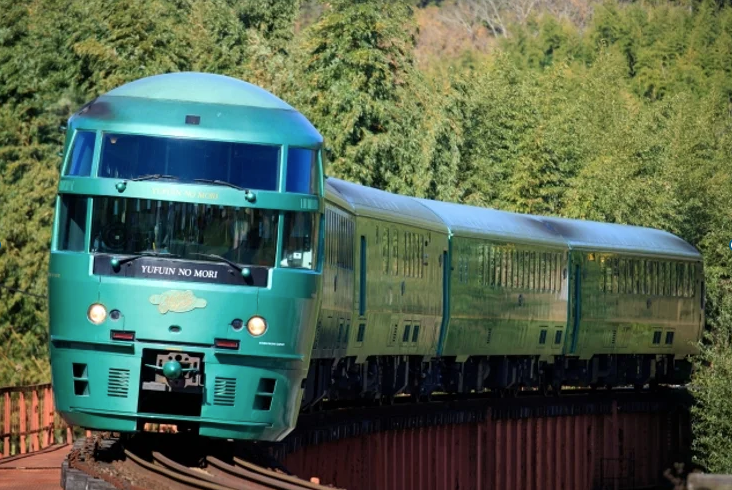
Activate your JR All Kyushu Pass today. Your first train of the trip is one of the best: the Yufu no Mori Limited Express, a retro forest-green train that winds through mountains and rice paddies to the onsen town of Yufuin. Book a window seat — the scenery is stunning.
Yufuin (Morning)
Yufuin is everything you imagine when you picture a Japanese hot spring town. Steam drifts over tiled rooftops. Wooden ryokan (traditional inns) line the back streets. Lake Kinrin shimmers in the valley, often shrouded in early-morning mist. Despite its popularity, it retains an unhurried, intimate atmosphere that Beppu — your afternoon destination — lacks.
Yunotsubo Street — The main shopping lane through town, lined with independent cafes, craft shops, and stalls selling local sweets and flavoured soft-serve ice cream. Block out an hour to wander.
Kinrin Lake — A short walk from the town centre. Arrive early for the mist effect, and look out for the small shrine at the water's edge.
Day Onsen — Yufuin has dozens of public and private baths. Budget an hour to soak before your afternoon train. Many ryokan accept day visitors for a small fee.
Spend about three hours in Yufuin before catching a local train to Beppu.
Beppu (Afternoon)
Beppu is the most productive geothermal city on earth. More hot spring water bubbles out of the ground here than almost anywhere on the planet. Unlike the refined elegance of Yufuin, Beppu embraces its volcanic chaos with cheerful enthusiasm — steam vents from drain covers, roadside baths sit next to convenience stores, and the famous 'hells' put on a spectacular show.
Jigoku Meguri (Hell Tour) — Visit the eight famous hells: bubbling cobalt-blue pools, blood-red iron springs, mud that glops and plops like something from another planet. It costs a little to enter but is well worth it.
Beppu Beach Sand Bath — Lie down on the beach and be buried up to your neck in naturally geothermally heated sand. It sounds odd. It feels extraordinary.
Takegawara Onsen — A beautiful Meiji-era bathhouse offering both sand baths and traditional mineral spring baths at very reasonable prices.
Stay overnight in Beppu to maximise your onsen time, or take the Sonic Limited Express back to Fukuoka. Search Beppu ryokan with onsen
Day 3: Nagasaki — History, Harbour, and Heartbreak
Today requires an early start. Take the Limited Express Kamome (from Fukuoka or Beppu) to Nagasaki, one of the most historically complex and emotionally layered cities in Japan.
Nagasaki spent centuries as Japan's only open port to the outside world during the country's long period of isolation. Portuguese missionaries, Dutch merchants, and Chinese traders all left permanent marks on the city's culture, food, and architecture. Then, on August 9th, 1945, the city became the target of the second atomic bomb. Understanding both sides of Nagasaki's story makes it one of the most affecting destinations in all of Japan.
What to See
Nagasaki Atomic Bomb Museum & Peace Park — An essential visit. The museum is harrowing but sensitively handled. The Peace Park sits at the hypocentre with a striking memorial statue. Plan at least two hours here.
Glover Garden — A hillside open-air museum of preserved Western-style mansions built by foreign merchants in the 19th century. The views over Nagasaki Bay are lovely, especially at dusk.
Dejima — The reconstructed Dutch trading post that was Japan's only legal point of contact with the Western world for over 200 years. Surprisingly interesting, especially if you are into early modern history.
Nagasaki Chinatown (Shinchi) — One of Japan's oldest Chinese communities. Try champon noodles (a rich, seafood-heavy broth) or sara udon (crispy noodles with a thick sauce). Both are Nagasaki specialities you will not find like this anywhere else.
Mt. Inasa Night View — Take the ropeway up after dinner. Nagasaki is famously listed among Japan's three great night views, and the panorama of the harbour city below is spectacular.
Stay overnight in Nagasaki — there is more than enough here to fill an evening. Browse Nagasaki hotels
Day 4: Kumamoto — Samurai Castles and Moving On
Head north by Shinkansen to Kumamoto, home to one of Japan's most iconic feudal castles. The 2016 Kumamoto earthquakes caused significant damage to the castle complex, and the painstaking restoration work is ongoing — which makes visiting it right now a genuinely fascinating experience in its own right.
Morning and Afternoon
Kumamoto Castle — The main tower has been restored and reopened. Walk through the exhibitions inside and then take in the extraordinary scale of the stone walls and towers from the grounds below. This is one of Japan's three premier castles.
Suizenji Jojuen Garden — A Edo-period garden that uses miniature hills and ponds to recreate the 53 stages of the famous Tokaido road between Kyoto and Edo. Peaceful and beautifully maintained.
Shimotori and Kamitori Arcades — Kumamoto's main covered shopping streets are good for picking up local specialities. Look for karashi renkon (lotus root stuffed with spicy mustard miso and deep fried) and, if you are feeling adventurous, basashi (raw horse sashimi — a Kumamoto delicacy).
Kurokawa Onsen (Optional) — If you want to build in one more hot spring experience, Kurokawa is a 90-minute bus ride from Kumamoto and widely regarded as one of Japan's most beautiful onsen villages. Go for an afternoon and a night if your schedule allows.
Evening
Continue south on the Kyushu Shinkansen to Kagoshima, where you will spend your final night. Search Kagoshima hotels
Day 5: Kagoshima — Volcanoes, Gardens, and the Journey Home
Kagoshima is nicknamed the Naples of the East, and if you squint, you can see why: a warm, relaxed southern city sitting in the shadow of an active volcano, with a distinctly Mediterranean lack of urgency about it. Sakurajima, the volcano in question, rumbles and occasionally erupts across the bay. It is simultaneously dramatic and completely normal to the locals.
Morning
Sakurajima — Take the 15-minute public ferry across the bay (covered by a separate ferry ticket — not the JR pass, but very cheap). Once on the island, rent a bicycle or take a bus around the lava fields. Stop at one of the foot-onsen along the shoreline for a soak with a volcano view. Do not miss the Yunohira Observatory for sweeping crater views.
Sengan-en Garden — A magnificent 17th-century samurai villa garden, with Sakurajima framed perfectly across the bay as a borrowed view. The garden uses the volcano as a deliberate compositional element. Extraordinary.
Afternoon
Shiroyama Observatory — A quick taxi or bus ride up the forested hill behind the city. The view of Kagoshima, the bay, and Sakurajima from the top is the definitive image of the city.
Kagoshima Ramen — Before you leave, try Kagoshima's own version of ramen: a slightly lighter, cleaner pork broth than Fukuoka's tonkotsu, served with straight noodles. The city also does excellent kurobuta (Berkshire pork) dishes.
In the late afternoon, board the Kyushu Shinkansen back to Hakata/Fukuoka, concluding your 5-day circuit of Kyushu in style.
Practical Tips for Travelling Kyushu by Train
Reserve seats early — Shinkansen and limited express trains require reservations. They are free with the JR All Kyushu Pass, but popular trains like the Yufu no Mori fill up fast — book before you leave home.
Check schedules — The JR Kyushu app (available in English) is excellent for planning journeys and checking real-time departures.
Consider extending in Beppu or Nagasaki — Both cities reward slower travel. If you have flexibility, spend an extra night in either to go deeper.
IC card for local travel — Load up a Suica or ICOCA card for buses, non-JR trains (like Nagasaki's tram system), and convenience store purchases.
Pack light — You will be moving cities every day or two. Luggage forwarding (takkyubin) services from hotels to your next destination are affordable and widely available.
Onsen etiquette — Tattoos are still prohibited at many traditional onsen. Book private baths (kashikiri onsen) if this applies to you — most ryokan offer them.
Ready to Book?
The JR All Kyushu Pass is available for purchase online before you travel. Buying in advance allows you to exchange the voucher at a JR Kyushu office upon arrival. Buy the JR All Kyushu Pass
For accommodation along the route, search hotels and ryokan across Kyushu here — filtering by proximity to train stations will make your trip significantly smoother.
Kyushu is the kind of place that stays with you long after you leave. The smell of sulphur from a Beppu hell, the view of Sakurajima at sunrise, a bowl of Fukuoka ramen at midnight — five days is enough to fall in love with this island. Just not enough to see everything. Consider yourself warned.
Happy travels.